
The long way home
I didn’t set out to be a midwife. The idea took root in an anthropology module on healing, shamans and magic at the University of Manchester in 1990. Midwives were posited as modern guardians of the sacred threshold between life and death, which excited me hugely and I filed the idea away for twenty years.
Some of those years were in Brazil, where my brother, Peter Silverwood-Cope, was an anthropologist, specialising in the indigenous peoples of the northwest Amazon. He used to divide his life between living with the Maku tribe across the border regions of Brazil and Colombia, and teaching at the Universidade de Brasília. Amongst other extraordinary achievements, he built an airplane from a kit and was a black belt in karate. When he visited us in Berkshire he would bring real bows and arrows and hand made artefacts from Amazonas, and chop bricks in half with his bare hands. Needless to say my little brother and I were obsessed.
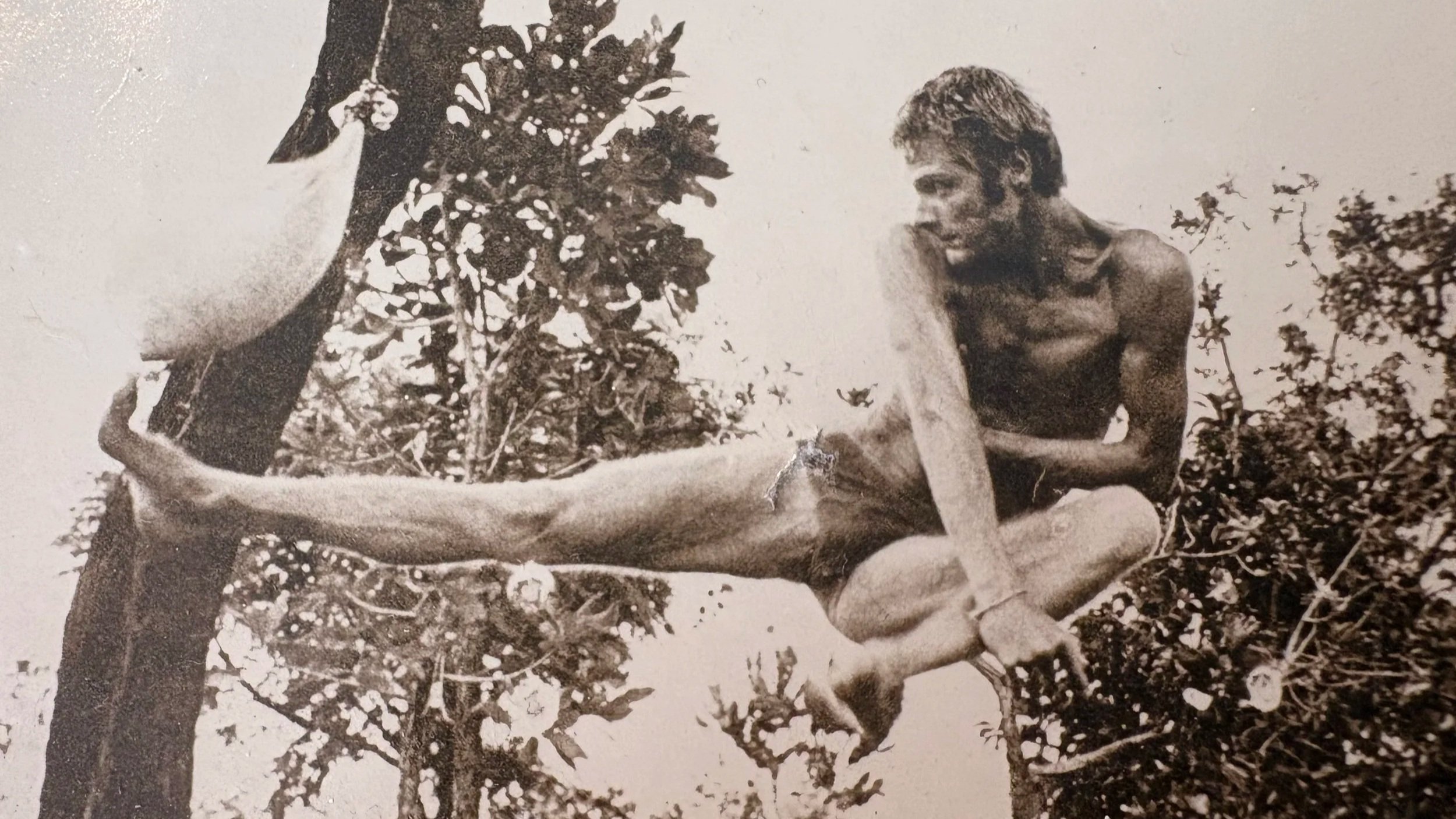
Peter Silverwood-Cope, Brazil c1970
I followed him there, teaching English in Brasilia, learning Portuguese, thriving in a culture with a wildly different relationship to birth than the one I had grown up with. I would return to Brazil twice more, once as a student midwife on elective placement at Hospital Sofia Feldman in Belo Horizonte, one of the most progressive maternity hospitals in the world, and once to present at the International Conference on Humanisation of Childbirth in Brasilia in 2016.
I came back to London in my late twenties and spent a decade in brand strategy, copywriting and creative direction, developing my interest in words, language and how stories shape behaviour and belief.
Then I had children. In my first pregnancy in 2002, I found my way to the Active Birth Centre in London, to Janet Balaskas and Françoise Freedman of Birthlight to yoga, water, movement, the idea that birth was something a body already knows how to do if it is supported in a gentle humanistic way. Thanks to the care, confidence and quiet encouragement of my midwife Joy Clarke, who presented home birth not as an alternative, but as the normal, default choice, all three of my children were born in water at home. I experienced the transformational power of undisturbed birth, my own way, on my own terms. Joy later invited me to accompany her on community visits, where I saw authentic midwifery in practice. Joy, who appears elsewhere on this blog as one of the UK's foremost FGM specialists, was my midwife and, in many ways, my first teacher. She shaped not only the births of my children, but the direction of my own life as I became a midwife because of her.
My primary understanding of birth was something way beyond a medical, or even a physical, event. Michel Odent, who trained me as a doula in 2011, had been writing for decades about the holistic nature of birth, its deep continuity with sexuality, its dependence on the same hormones, the same conditions of privacy, darkness, safety and the absence of observation. The sacred threshold my anthropology degree had hinted at turned out to have a precise physiological meaning: the passage from one state of being to another, requiring conditions that modern obstetric culture systematically dismantles. Understanding birth this way, as a potentially healing, psychosexual, sacred event with its own intelligence and its own mighty rhythms, changed how I practised, and what I understood to be at stake when those conditions were absent. Midwife Tricia Anderson articulates it beautifully in Out of the Laboratory: Back to the Darkened Room, the best article on homebirth I’ve ever read.
Only for the Heartstrong
In 2015 I wrote a chapter entitled "Only for the Heartstrong" for The Roar Behind the Silence, Sheena Byrom and Soo Downe's collection on kindness, compassion and respect in maternity care. It charts coming to midwifery through fear, birth's capacity to transcend and heal it, and the body's ability to reclaim itself when the birthspace is held without judgement or unnecessary interference. I qualified as a midwife in 2015, with a first-class degree from UWE Bristol, a dissertation on physiological birth as a reasonable option for women with a term breech baby, and an elective placement at Hospital Sofia Feldman in Belo Horizonte. I received the Iolanthe Midwifery Trust Award, the Wellbeing of Women Award that year, as well as UWE student of the year Futures Award and was nominated for Nursing Times Inspirational Student of the Year. The Royal Society of Medicine gave me their Wendy Savage Travel Bursary to present at the International Conference on Humanisation of Childbirth in Brasilia in 2016, full circle, back to Brazil.
The breech years
My dissertation led to years of enquiry into physiological breech birth, a skill largely lost from the profession following the 2000 Term Breech Trial. Fascinated by how a profession regains knowledge once it has become deskilled, I set about deliberate acquisition of competence in physiological breech, training with Shawn Walker and Jane Evans, and completed an observational internship with Professor Frank Louwen's breech team at Johann Goethe University in Frankfurt, one of the few centres where physiological vaginal breech birth remained routine, which I wrote about here. I went on to facilitate breech birth study days across the UK, rewrite my trust's clinical breech presentation guidelines, and co-author a peer-reviewed paper on breech training with Shawn Walker and Victoria Cochrane, published in The Practising Midwife in 2017.
Through helping Shawn collect data for a Delphi study of the principles of physiological breech birth practice, I became friends with legendary midwife Mary Cronk. Mary entrusted me with her home birth bag and one of her Pinards stethoscopes, making me promise that one day I would become an independent midwife. As I now begin that process, I often think of Mary’s fierce tenderness, and what she would say as community midwifery is systematically dismantled and a 50% caesarean rate. I’m holding onto a thread connecting generations of midwives committed to relational, physiological care.
Editing, writing, advocacy
Alongside clinical practice I have kept writing, as editor of Midwifery Matters (2020-2021), the magazine of the Association of Radical Midwives, sourcing content, conducting interviews, writing editorials and blogs. I served on the steering committee for Midwifery and Human Rights: A Practitioner's Guide, produced by Birthrights and the Royal College of Midwives in 2016.
Yoga, nidrā, the nervous system
In 2017 after a one-to-one yoga nidrā session with Uma Dinsmore-Tuli in Stroud, I left with a recording and a different understanding of the radical power of rest. I trained in pregnancy yoga with Uma and with Birthlight, completed a Hatha yoga teacher training at Bristol School of Yoga, and a Total Yoga Nidra immersion with the Yoga Nidra Network. I have taught pregnancy yoga within the NHS and privately for many years, and now offer personalised yoga nidra for those who’ve had difficult birth experiences
In 2022 I completed Peter Levine's Healing Trauma course and began to find language for things I had been observing in clinical practice for years: the way difficult birth experiences live on in the body, the way the nervous system holds what the mind has not been able to process, the way healing requires not just understanding but embodied completion. I am currently in the beginning year of Somatic Experiencing practitioner training with the School of Somatic Experiencing International.
Where now
I have been a community midwife at Stroud Maternity Unit since 2017, supported hundreds of births across all settings from homes to theatre, and sat with many more people as they’ve tried to make sense of their births. I have watched what happens when the system fails them, and what happens when it holds them well. I have felt firsthand and watched what good midwifery can do when it is allowed to.
Looking back, nothing feels accidental now: anthropology, Brazil, advertising, yoga, home birth, breech birth, writing, human rights, the nervous system: each has taught me something about what happens when people are truly seen and supported, and what happens when they are not.
I offer birth reflection sessions because I believe every person deserves the chance to make sense of their birth in the presence of someone who understands both birth physiology and the nervous system; a place where their story can be told slowly, safely and without judgement.
Everything I have done has been preparation for this work. If you'd like to learn more about birth, trauma and healing, have a wander round the articles on this blog.
And if you're ready to make sense of your own birth experience, you can book a birth reflection session here.
Why independent practice
Mary Cronk made me promise I would become an independent midwife and in her honour I am beginning to keep that promise.
The NHS has given me fourteen years of experience across every birth setting, from home to theatre, from the most straightforward labours to the most complex. I am grateful for all of it, but I have also watched, year by year, as the conditions that make good midwifery possible have been systematically withdrawn. Larger caseloads. Fragmented postnatal care. Birth units reconfigured out of existence. Midwives reduced to data entry and protocol compliance, with less and less time to simply be with the person in front of them.
The evidence for continuity of carer is unambiguous and has been for decades. People who are known by their midwife throughout pregnancy, birth and the postnatal period have better outcomes, fewer interventions, higher satisfaction and greater wellbeing. The relationship between a midwife and the person they are caring for is the mechanism through which good midwifery works; it is the thing that makes the nervous system feel safe enough to birth, and what Mary meant when she described the midwife as a professional servant: not to the institution, but to the individual.
Independent practice is where I can offer that properly. A small number of clients at a time. Genuine continuity. Unhurried appointments. Care that is built around a person's history, body, circumstances and needs, rather than around a system's constraints.
Birth is sacred, and in most cases, with proper support, physiological. It is a rite of passage with its own intelligence and its own requirements. Every person who gives birth deserves to be genuinely known and held throughout the transition to parenthood. If you'd like to know more about independent midwifery care with me, you can find out more here.
